

Complete Guide to Choosing a Home Projector: Easily Create Your Personal Cinema!
2025-11-03
I. Three Main Types of Home Projectors, Each with Its Own Merits
1. Traditional Lamp Projectors
(1) Advantages: Typically offer excellent brightness performance, especially suitable for environments with some ambient light like living rooms; mature and stable technology with good color reproduction.
(2) Disadvantages: Limited lamp life (usually several thousand hours), requiring replacement and increasing long-term costs; relatively high heat generation and operational noise; requires warm-up time to reach optimal brightness after startup.
2. LED Source Projectors
(1) Advantages: Extremely long light source lifespan (up to 20,000+ hours), generally eliminating the need for replacement; instant on/off capability; typically vibrant and rich color performance; compact, portable, quiet operation with low heat generation.
(2) Disadvantages: Absolute brightness at the same price point is usually lower than traditional lamp models, making them more suitable for darker environments (best in rooms with good light control); Color Light Output (CLO) should be considered, as relying solely on lumens (brightness) values may not provide a complete picture.
3. Laser Source Projectors
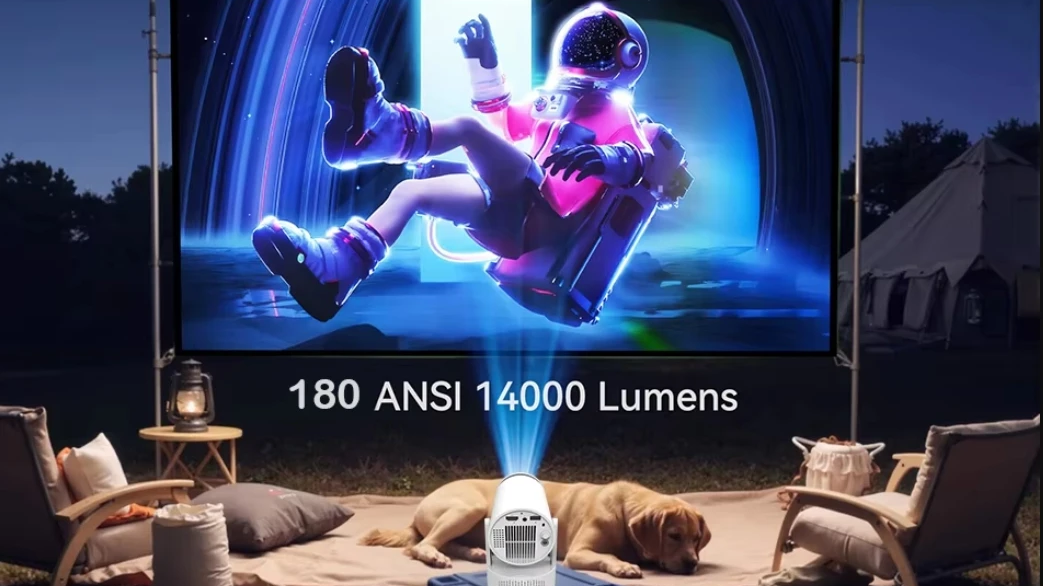
(1) Advantages: Combine the high brightness of lamps with the long lifespan of LEDs; high brightness, excellent color performance, and wide color gamut; long lifespan (20,000+ hours); quick startup, ready to use immediately; slow brightness degradation, maintaining stable image quality over long-term use.
(2) Disadvantages: Higher technological barriers result in relatively higher prices; special care should be taken to avoid direct laser exposure to the eyes (though home products typically include comprehensive safety protections).
II. Beyond the Light Source: Key Factors That Determine the Experience
1. Resolution: The Foundation of Clarity
* Mainstream Choice: 1080P Full HD (1920x1080) currently offers the best value for money, providing sufficient clarity for most movies and TV shows.
* Advanced Choice: 4K UHD (3840x2160) delivers a more refined, grain-free image, with significant advantages especially on screens over 100 inches. It's ideal for users pursuing the ultimate picture quality. Pay attention to the distinction between "True 4K" chips and "Pixel-Shifting 4K" (which uses technical means to achieve a near-4K effect).
2. Brightness: The Antidote to Ambient Light
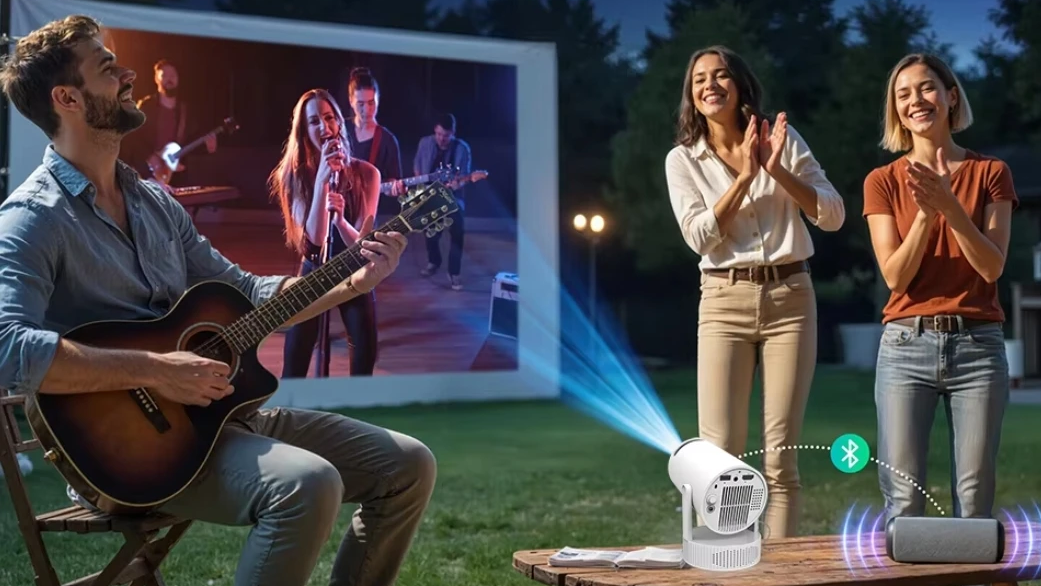
* Bedroom/Dedicated Dark Home Theater: 800 - 1500 ANSI lumens is usually sufficient.
* Living Room/Areas with Some Ambient Light (e.g., with curtains drawn during the day): It is recommended to choose 1500 ANSI lumens or higher. The higher the brightness, the better it counteracts ambient light. Remember: the stronger the ambient light, the higher the brightness requirement.
* Key Unit: Focus on ANSI lumens, which is a relatively unified and reliable standard. Avoid relying solely on "light source lumens" or "brightness lumens" as claimed by some brands.
3. Throw Ratio & Installation: Key to Space Utilization
* Standard Throw Ratio (approx. 1.2:1): The most common type, requiring a certain projection distance.
* Short Throw Ratio (<1.0:1): Can project a large image from a relatively short distance, saving space.
* Ultra-Short Throw Ratio (<0.4:1): Can project a 100-inch+ image when placed close to the wall, minimizing cable management issues. Ideal for small spaces or users seeking a clean setup (often works best with an ambient light rejecting screen).
* Understanding Throw Ratio: Throw Ratio = Projection Distance / Image Width. A smaller number means a larger image can be projected from the same distance.
* Installation Method: Consider whether you will ceiling mount, place it on a table (front projection), or use a stand. This determines the need for features like lens shift and keystone correction (especially horizontal/vertical correction for off-axis placement).
4. Smart System: A Convenience Bonus
* Built-in Smart OS: Allows direct internet connection for streaming online videos and installing apps without an external media player. Focus on the system's smoothness, content library, and update/maintenance support.
* No Smart System: Offers a purer, often more professionally tuned picture quality, but requires an external source device (e.g., streaming stick, PC, Blu-ray player).
5. Image Processing Engine & Calibration: This affects color accuracy, contrast performance, motion handling, etc., directly impacting the viewing experience. Pay attention to actual screen capture images in reviews.
III. A Smart 4-Step Selection Guide to Find Your "Perfect Match"
1. Define Your "Main Viewing Environment":
* Is it a bedroom/dedicated theater with good light control? Prioritize models with excellent color and contrast performance. Brightness requirements can be somewhat relaxed. Both LED and laser are good choices.
* Is it a living room where you want to watch during the day? Brightness (suggested 2000+ ANSI lumens) and resistance to ambient light (works best with an ambient light rejecting screen) are key. Traditional lamp or high-brightness laser models are the main contenders. Ultra-short throw models paired with anti-light screens are an excellent choice for a clean living room setup.
* Need portability? Focus on compact, portable LED pico projectors, especially those with built-in batteries.
2. Measure Your Space and Calculate Screen Size:
* Measure the distance from your planned projector placement to the screen/wall.
* Determine your desired screen size.
* Use a projector throw calculator (available on many manufacturer or third-party websites) and the target model's throw ratio to verify if your desired screen size is achievable in your space. This step is crucial! Avoid buying a projector only to find it can't fill the screen or projects an image that's too large.
3. Prioritize Core Specifications:
* For Movie Enthusiasts: Resolution (4K/1080P) > Color/Contrast > Brightness > Smart System.
* For Main Living Room/Daytime Use: Brightness (ANSI Lumens) > Resolution > Ambient Light Rejection > Smart System/Ease of Use.
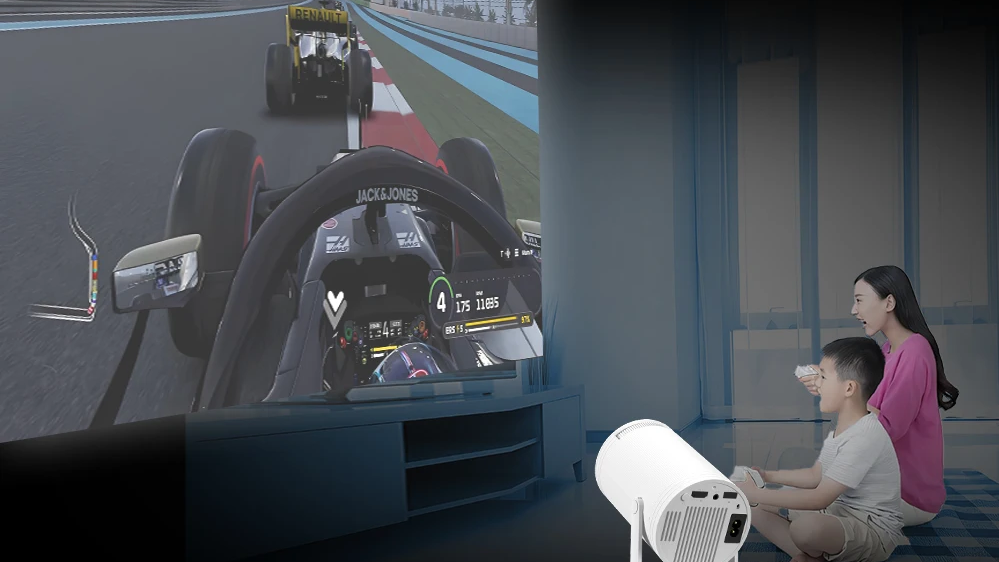
* For Portable/Camping/Bedroom Use: Portability/Size > Noise/Heat > Brightness > Built-in Battery Life (if needed) > Resolution.
4. Check Key Functional Details:
* Keystone Correction: If the projector cannot be placed directly in front of the screen, you must choose a model with robust horizontal/vertical keystone correction (especially automatic correction).
* Noise Level: For noise-sensitive users (especially in bedrooms), pay attention to the operational noise level (dB) mentioned in reviews.
* Connection Ports: Check for sufficient HDMI ports (especially HDMI 2.0 or ARC/eARC for 4K HDR), USB ports, etc., to meet your external device needs.
* Sound Quality: Built-in speakers are usually only adequate for basic needs. If sound quality is important, plan to budget for a soundbar or speaker system.
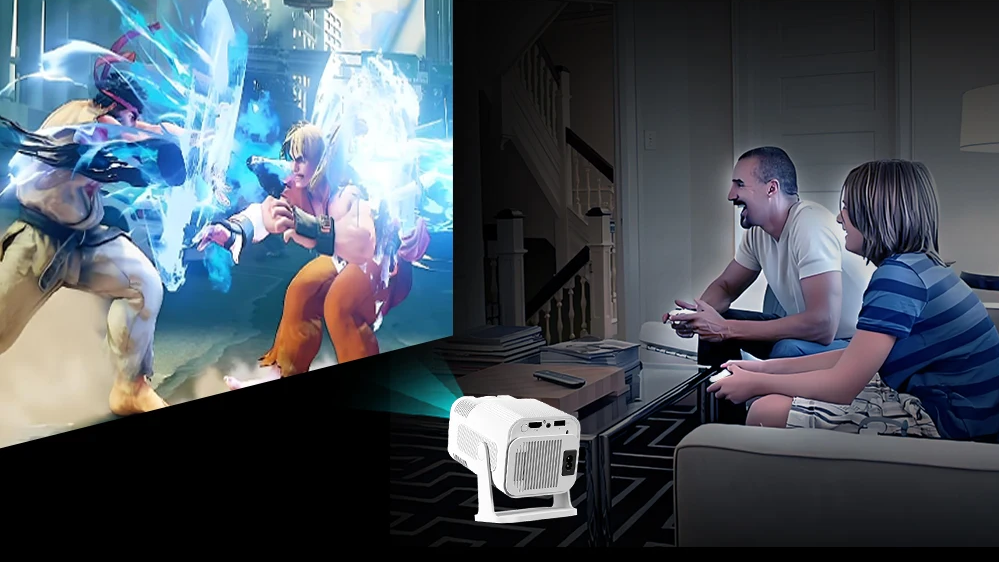
The appeal of home projectors lies in their ability to break through the size limitations of traditional televisions, bringing a cinematic, immersive experience into our daily home lives.
When making your choice, there's no need to obsess over every technical specification. The key is to match the product's features with your actual usage scenarios and spatial conditions.
Within your budget, prioritize fulfilling your most core need—whether that's ultimate picture quality, the ability to combat bright ambient light, flexible portability, or user-friendly operation.
Imagine this: On a weekend evening, you turn off the main lights, switch on the projector, and the wall instantly transforms into a giant screen. A cherished classic movie begins to play. Your family is curled up on the sofa, with warm cups of tea nearby and the aroma of popcorn filling the air—this unique, personal cinema happiness is the true value a projector brings.
Are you ready to embark on your very own home theater journey?
Name: Janice
Email: sales11@ihomebox.com
Tel/Whatsapp: +86 19926651189