

Step into a new era of super-large screen gaming entertainment, analyzing the trends of home projectors in video gaming.
2025-12-05
I. Revolution in Field of View: The Transformative Impact of Large Screens on Gaming Experience
Traditional LCD TVs are mostly confined to the 60- to 80-inch range, primarily due to constraints in panel manufacturing costs and the spatial layout of typical households. Even though a limited number of extra-large TVs (such as 98-inch or larger models) are available on the market, their steep prices and the challenges of installation often deter average consumers. In contrast, home projectors can effortlessly project images ranging from 120 to 180 inches or even larger, offering players a cinematic visual experience.

This expansion of the visual field is not merely an increase in physical size—it represents a qualitative leap in the gaming experience. In open-world games like ‘The Legend of Zelda: Breath of the Wild’ or ‘Elden Ring’, the vast screen allows players to take in the breathtaking landscapes of the game world without obstruction, while also making it easier to spot distant targets or hidden elements. In competitive shooters like ‘Call of Duty’ or ‘Apex Legends’, a larger screen means that enemy character models appear bigger, enabling players to detect opponents' movements earlier and gain a tactical advantage. In racing games such as ‘Forza Horizon’, a broader field of view helps players more accurately judge turn angles and braking points, enhancing their performance on the track.
It is worth noting that large screens offer not only competitive benefits but also health advantages. A bigger display allows players to maintain an appropriate viewing distance, reducing eye strain while still clearly seeing all in-game details, including small-font user interfaces and distant environmental elements.
II. Perfect Rendering of Dynamic Details: Gaming Optimization in Projection Technology
Home projectors have made significant strides in technical specifications, fully meeting and even exceeding the demands of gamers. Currently, mainstream high-end home projectors widely support 4K resolution (3840×2160), with some models even offering 8K capability, delivering exceptionally detailed images and rich color gradients. For fast-paced dynamic games, home projectors perform particularly well. The new generation of home projectors commonly supports high refresh rates of 120Hz or even 240Hz, coupled with input lag as low as 16ms or less, ensuring smooth transitions and instant response to player inputs. In action games like ‘Devil May Cry 5’ or ‘Bayonetta’, high-speed combos and dazzling special effects are perfectly rendered on large screens, with every frame of animation clearly distinguishable, helping players precisely time attacks and dodges.
In terms of color performance, home projectors utilize wide color gamut technologies such as DCI-P3 and BT.2020, along with support for HDR10, HDR10+, HLG, and even Dolby Vision. This enables them to showcase every meticulously designed light and shadow detail by game developers. Dark scenes no longer appear as murky blacks—for instance, in the horror settings of the ‘Resident Evil’ series—while bright details avoid overexposure, such as the sunlight filtering through leaves in ‘God of War’. This allows players to experience the visual artistry of games as intended by their creators.
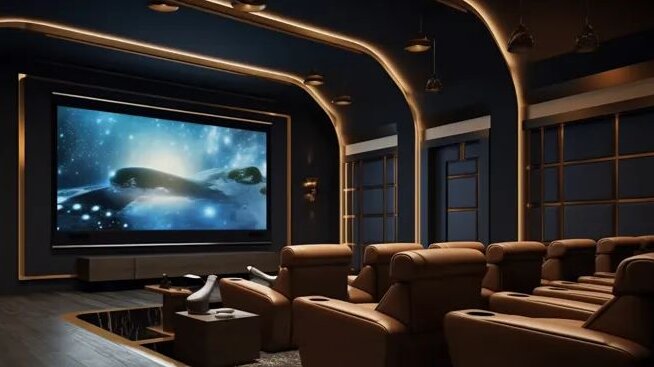
The clear rendering of dynamic details is also attributed to unique image processing technologies in projectors. For example, black frame insertion technology can reduce motion blur, MEMC (Motion Estimation and Motion Compensation) can predict and smooth fast-moving scenes, and dedicated gaming modes disable unnecessary post-processing to minimize latency. Together, these technologies ensure that even the most intense battle scenes remain sharp and discernible.
III. The Pinnacle of Immersion: An Experience Surrounded by the Game World
Immersion is one of the most cherished elements in gaming, and large projection screens hold an unparalleled advantage in this regard. When the visuals dominate most of the player’s field of view, they naturally experience a sense of "presence"—the feeling of truly stepping into the game world. This psychological phenomenon, often referred to as "spatial presence," is a key metric for measuring immersive experiences. A large screen more effectively stimulates the player's peripheral vision, triggering stronger emotional responses. In horror games like ‘Silent Hill’, enemies that suddenly appear in dark environments elicit a more genuine sense of panic. In flight simulation games such as ‘Microsoft Flight Simulator’, the vast blue skies and cloudscapes evoke a heightened feeling of freedom. In adventure games like ‘Uncharted’, grand and ancient ruins inspire deeper awe and wonder.
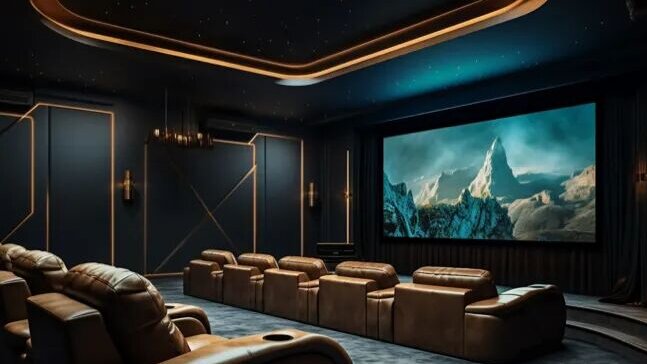
Home projection systems are uniquely capable of creating a "dark room experience" that is difficult to achieve with traditional televisions. By controlling ambient lighting and enveloping the player in expansive visuals, projectors allow gamers to become fully absorbed in the digital realm, free from external distractions. This total engagement enhances not only emotional and sensory involvement but also deepens the player’s connection to the narrative and environment crafted by developers. Whether navigating tense stealth sequences, exploring open worlds, or engaging in cinematic storytelling, the wraparound effect of a large projected image transforms gameplay from mere interaction into a compelling, almost tangible journey.
IV. Scenario Adaptability and Future Outlook
Another significant advantage of home projectors lies in their excellent adaptability to different scenarios. Unlike fixed-size televisions, projectors allow flexible adjustment of the projected screen size based on the available space. In a dedicated gaming room, they can maximize wall space to cast a screen of 150 inches or larger. In a living room setting, the size can be adjusted to 100–120 inches to accommodate everyday use, while in a bedroom, an 80-inch projection can offer a cozy gaming session before sleep. This flexibility makes projectors particularly well-suited to modern, varied living spaces and lifestyles.
Installation options are equally diverse. Users can choose traditional front projection, space-saving short-throw or ultra-short-throw projectors, or even portable models paired with tripods. Many home projectors support a wide range of lens shift, vertical and horizontal keystone correction, and side projection capabilities, greatly simplifying the installation process.

In summary, large-screen gaming is not only ideal for solo immersive experiences but also excels in social and multi-player settings. During family gatherings, a 200-inch screen ensures everyone can clearly enjoy games like ‘Mario Kart’ or ‘Just Dance’. Among friends, sports titles like ‘FIFA’ or ‘NBA 2K’ can deliver a stadium-like viewing experience, while cooperative games such as ‘It Takes Two’ showcase their exquisite artistic design more vividly on a big screen.
The advantages of home projectors in the realm of video gaming can no longer be overlooked. Whether it's the tactical edge sought by competitive players, the immersive depth desired by casual gamers, or the shared entertainment valued by families, large projection screens offer unique value. With ongoing technological advancements, previous limitations such as insufficient brightness or high input lag have been significantly mitigated, while the inherent strengths of projectors—screen size and visual comfort—have become even more pronounced.
Name: Janice
Email: sales11@ihomebox.com
Tel/Whatsapp: +86 19926651189